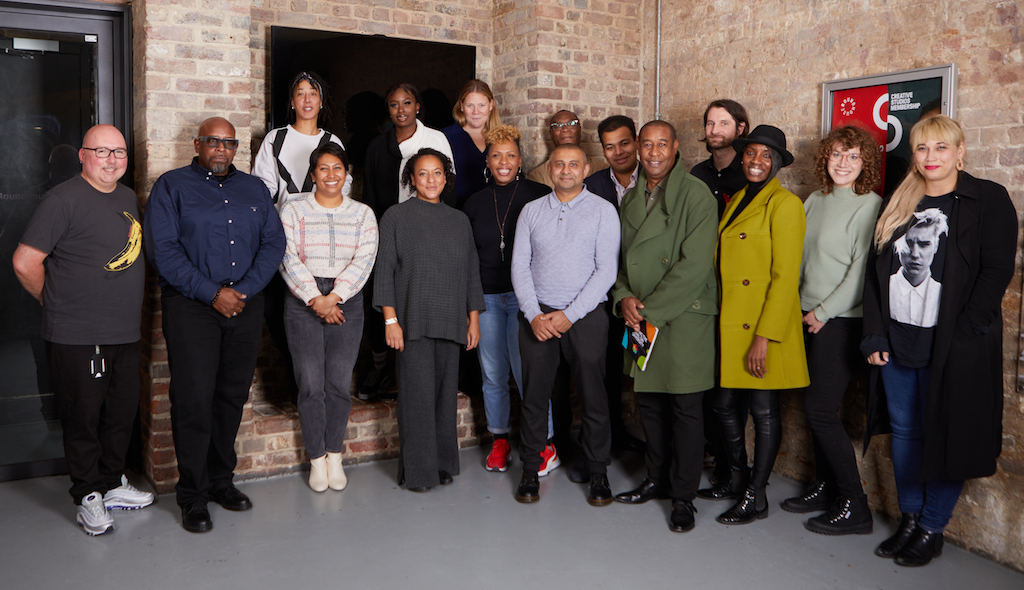
UK Music has today revealed the findings of its 2022 Workforce Diversity Survey, as part of its UK Music Diversity Report and the Diversity Taskforce’s mission to boost inclusion and diversity across the industry.
The survey tracks progress to boost diversity and inclusion in the UK’s music industry, that supports 145,000 jobs and it also provides an action plan with 15 key recommendations to improve diversity across the music industry.
We need to create a consciously inclusive culture right across the music industry and right across the UK
UK Music Diversity Taskforce Chair Ammo Talwar MBE
The 15 recommendations in the plan include:
- cultivating a transparent, safe and consciously inclusive culture for all staff
- increasing opportunities for underrepresented groups
- working towards a five-year EDI strategy and vision
- incorporating EDI into every part of an organisation or businesses structures
- publishing data on gender, ethnicity and disability pay gaps annually in larger employers
- ensuring there is a strong EDI mindset at the heart of all tendering and procurement processes
This is the fourth time UK Music has published the findings of the Workforce Diversity Survey, following the formation of the UK Music Diversity Taskforce in 2015. The first survey was launched in 2016 with subsequent reports were released in 2018 and 2020.
A total of 2,980 people responded to the survey over the summer, which focuses on the music industry workforce, as opposed to creators.
The report includes data on music industry representation of LGBTQ+ employees and employee socio-economic backgrounds, among other subjects.
Accelerate positive change
The survey’s action plan aims to accelerate positive change by boosting diversity and inclusion in music businesses.
Called The Five Ps, the action plan maps out five key areas that UK Music hopes the music industry can use as a framework to deliver enduring results.
The Five Ps
- People
- Policy
- Partnerships
- Purchase
- progress
It draws on policies both from UK Music’s survey findings and the lived experiences of those from diverse communities via a series of round-table events.
The recommendations build on the foundations laid out in 2020 in UK Music’s Ten-Point Plan for the sector, which outlined how UK Music members and the wider industry could take significant steps towards improving diversity in the music industry.
UK Music and its Diversity Taskforce hope the new action plan will extend that work right across the music industry and beyond by providing an essential toolkit.
Record number of women
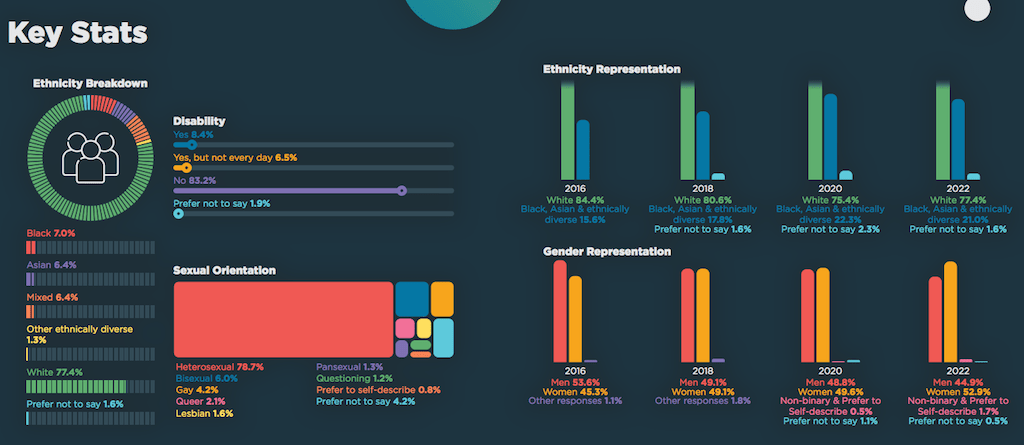
The report reveals that the number of women working in the industry has reached a record high of 52.9%, with those in mid and senior levels also rising since the previous survey in 2020. However, the survey reveals some women start to leave the industry in their mid-forties.
There is a disappointing drop in some parts of the industry, says the Diversity Taskforce, when it comes to the ethnic diversity of the workforce, after the positive progress in our last survey two years ago.
One possible explanation it says is that those employees from Black, Asian and ethnically diverse communities have been disproportionately affected by the impact of COVID-19, which saw total jobs in the sector fall from a pre-pandemic high of 197,000 to 145,000 in 2021.
“Our 2022 survey shows how those from Black, Asian and other diverse communities have been hardest hit by the impact of COVID-19,” said UK Music Diversity Taskforce Chair Ammo Talwar MBE.
“The drop in the percentage of employees in several sectors of the industry is further evidence of why we must not take our foot off the accelerator when it comes to driving positive changes on diversity and inclusion as swiftly as we can.
“We need to create a consciously inclusive culture right across the music industry and right across the UK. Our hope is that the Five Ps – our Music Industry Action Plan – provides a robust and clear framework that anyone can use to help deliver that change.”
The key findings of the UK Music Workforce Diversity Survey 2022 include:
Gender
- There has been an increase in the total number of women employees compared to the 2020 survey. 52.9% of individuals working in the music industry in 2022 identified as a woman, which has risen from 49.6% in 2020.
- Figures show the percentage of women in mid and senior level roles within the industry is increasing. The number in mid-level roles rises from 40.4% in 2020 to 45.1% in 2022, and those in senior roles increases from 51.2% in 2020 to 53.3% in 2022.
- It is still the case that more young women are accessing the industry at an early stage but start to leave the industry in their mid-forties. Women are well represented in the 35-44 age category (53.0%) but the 45-54 age bracket (44.3%) is the point at which female representation starts to drop, with the numbers reducing further for those aged 55-64 (33.3%).
Ethnicity
- There has been a decrease in the total number of employees from ethnically diverse communities compared to the 2020 survey results. Just over one fifth (21.04%) of individuals working in music identify as Black, Asian or from an ethnically diverse background. This is down from 22.3% two years ago.
- The number of Black, Asian and ethnically diverse respondents aged 25-34 rose from 24.8% in 2020 to 26.3% in 2022, indicating that efforts to improve career progression may be starting to have an effect.
- In entry-level positions, the number of Black, Asian and diverse ethnicity employees fell from 34.6% in 2020 to 23.6% in 2022. At a senior level there was a drop from 19.9% in 2020 to 18.3% in 2022.
Disability
- 14.9% of the industry reported a disability, up from 12.2% in 2020; this could indicate that more individuals with a condition are working within the industry or that a greater number of individuals are comfortable disclosing their condition.
- Two-thirds (67.2%) of those who have a disability said they felt they had to compromise their health for work.
- 7.5% of those working at senior level declared a visible disability, with the greatest representation of disabled respondents at apprentice or intern level (13.6%).
Menopause
- For the first time, UK Music has used the survey to collect data relating to women or menstruating persons experiencing the menopause and the impact this could be having on their career.
- More than one in ten (11.2%) respondents said they have experienced menopause/perimenopause.
- Almost half (47.5%) have had their work affected by its symptoms, yet three quarters of these individuals (76.6%) have not taken time off work to manage their symptoms.
Parents and Carers
- The survey revealed that parents and carers are underrepresented in the music industry (29.7% compared to 44% of UK working population).
- Of the 68% respondents with no care responsibilities, the majority are female, pointing to a loss of female talent when they become mothers or carers.
 West Midlands Music Board